A Fun Read: Lead Together
Or, the leadership wisdom of squirrels 🐿️
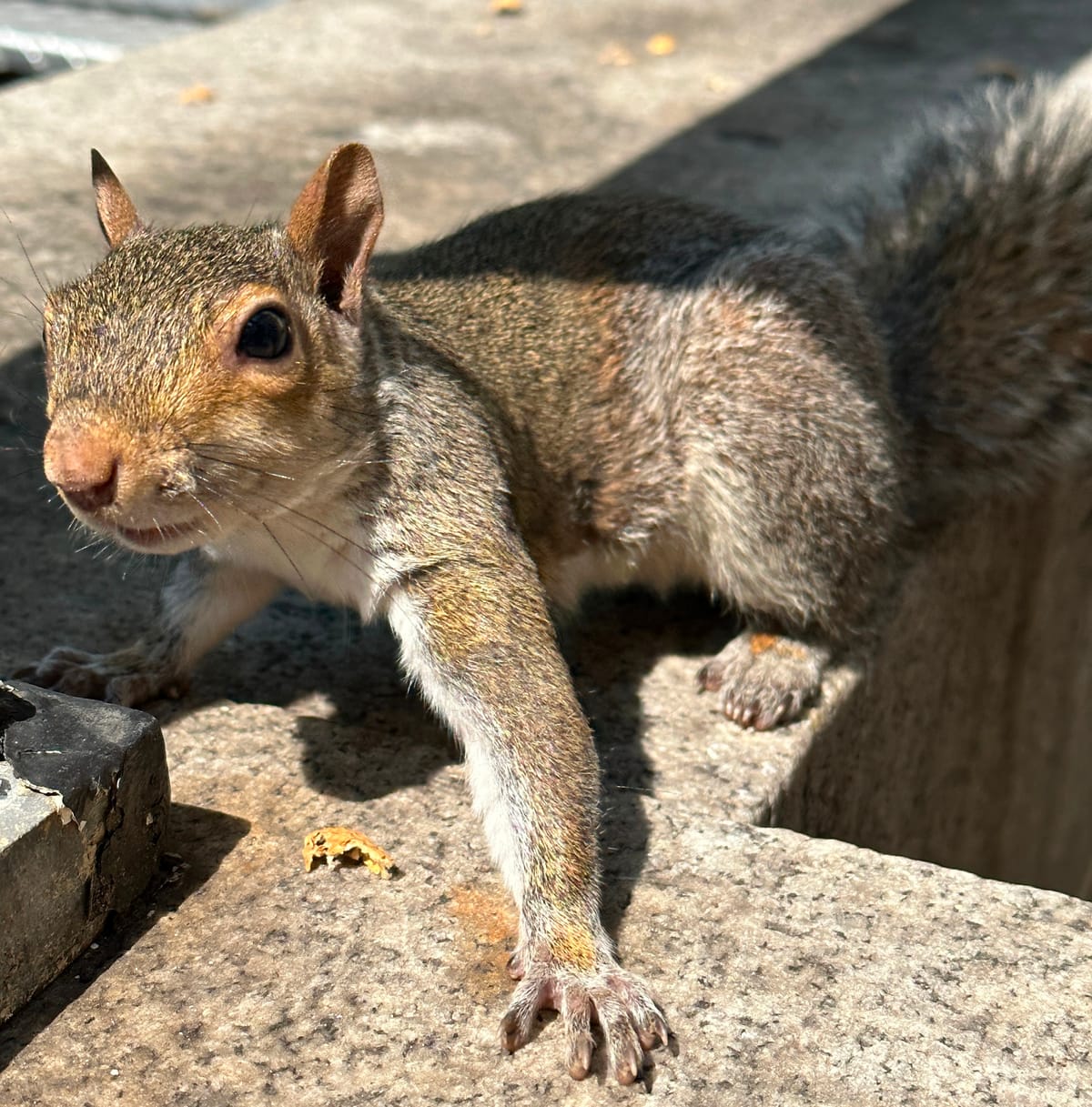
The other day, my friend Mary Kathryn recounted trudging to work on a gloomy morning when she spotted a pair of squirrels leaping through the trees. “They were frenetic yet graceful, silly yet focused,” she said. “I don’t know why, but on that hard day, I felt… encouraged by squirrels.”
That feeling stayed with me as I read Tania Luna’s Lead Together: Stop Squirreling Away Power and Build a Better Team. Through a squirrel workplace fable—complete with a Chief Nut Officer—Luna brings to life the kind of leadership our workplaces desperately need.
Thanks for reading Human Bureaucracy! Subscribe for free to receive new posts and support my work.
The story follows an ambitious but controlling middle manager squirrel (branch manager, perhaps?) who learns the hard way that commanding compliance from his team doesn’t work. Success comes from connecting others to the “why” of their work, empowering them to make decisions, and treating them like humans…err squirrels
It’s a playful book that helped me see both my leadership strengths—and foibles—with fresh eyes. Here are some takeaways I squirreled away:
Help Others See the Why
Luna’s tale reminds us that when teams understand the tangible impact of their work—those who will be nourished by the acorns you gather—they feel a deeper connection to it. This reminded me how crucial it is to loop back with my team after big meetings, presentations, or reports they’ve worked on. Showing how their work shaped the outcome isn’t just a courtesy—it builds ownership and pride, turning a task into a meaningful contribution.
It’s a lesson that applies beyond core teams, too. Contractors or external partners may focus on deadlines and deliverables, but explaining why their work matters helps them bring more energy and care to the “what.”
Autonomy > Compliance
One of Luna’s many puns—“squirreling away power”—drives home a critical point: leadership isn’t about control, it’s about letting go. Luna tackles a common fear: what if giving people more autonomy backfires? What if deadlines slip or someone slacks off? Her answer is refreshingly honest: some might. But the cost of micromanaging is far greater than the occasional stumble that comes with trust.
I’ve seen firsthand how my attempts to control my team stifles creativity. But when I’ve loosened the reins and shared decision-making, my team has risen to the occasion, often surprising me with solutions I wouldn’t have thought of. Autonomy isn’t about avoiding failure—it’s about creating an environment where success becomes a shared effort.
Luna’s squirrels get this. In the story, a condo development threatens their trees, and instead of pressing his team to the breaking point, this Nut Manager empowers the team to think creativelyIt’s a reminder that trusting people’s ingenuity often leads to solutions you’d never expect. Also recommend Dan Honig’s Mission Driven Bureaucrats which takes on this theme, but with humans, not rodents.
Everyone is on a Growth Process
Luna debunks the myth that poor performers don’t want to improve, comparing it to the absurd idea that people don’t want to breathe. Of course people want to grow—it’s human nature. If someone is struggling, it’s rarely because they’re content with the bare minimum. More often, it’s tied to deeper issues: disempowerment, being in the wrong role, or lacking the right tools or support.
This made me rethink times I’ve heard someone in the high-pressure halls of government say, “They just can’t hack it.” It’s a phrase that always makes me cringe—a rush to judgment that shuts down understanding. I’ve been guilty of it too, assuming someone’s struggles meant they weren’t cut out for the work instead of looking for the root cause and my contribution towards it.
Luna reframes poor performance as a starting point for growth, not a dead end. With the right environment—better guidance, stronger tools, or even a little more patience—most people can find their footing. Like a squirrel pup awkwardly learning to climb trees, we all deserve the chance to stumble and grow into our potential.
Building Community Sustains Change
Luna draws a sharp distinction between a “crowd” and a “community.” A crowd is a group of individuals focused on a leader—like a TED Talk audience. A community, by contrast, is interdependent: members rely on and support one another to create something bigger than themselves.
She challenges the myth of finding people who “fit the culture.” That mindset assumes culture is static and unchanging. If a team isn’t open to welcoming and adapting to new voices, it’s a crowd, not a community. True communities grow by evolving daily.
I saw this firsthand when I encouraged my team to bring their own icebreaker topics to meetings. What started as a way to get everyone involved became part of our rhythm. One busy day, I forgot to include an icebreaker. Someone immediately asked, “What about today’s question?” That small moment showed me they weren’t just participating—they were invested in making the change stick.
Luna’s insight reminded me: when a team feels like a true community, they carry momentum forward, even when the leader stumbles. Change is hard, but with a strong, interdependent team—one open to evolving together—it becomes sustainable.
From Buy-In to Build-In
A final takeaway is Luna’s challenge to the idea of “buy-in,” where leaders pitch a polished plan and try to sell their teams on it. This hit uncomfortably close to home for me. Too often, I’ve walked into meetings with pre-cooked ideas instead of open frameworks we could co-create together.
Luna’s “build-in” approach flips the script: let go of the self-imposed pressure to have everything figured out. When people help shape decisions, they’re naturally more invested. It’s not about convincing them your plan is great—it’s about empowering them to make the vision their own. For someone like me, who’s used to rolling up my sleeves and putting in the work solo, this was a humbling reminder: great ideas aren’t delivered—they’re built together.
A Squirrel Shaped Mirror
This lighthearted, fun book didn’t let me off the hook. Am I as collaborative and trusting as I think I am? Probably not—but Lead Together gave me a fresh perspective and practical tools to get closer.
And the squirrels? They’re more than a metaphor. They’re a reminder that leadership—like leaping from tree to tree—is about trust and connection. So the next time I’m feeling stuck, I’ll remember to take a walk, look up, and be “encouraged by squirrels.” 🐿️
Thanks for reading Human Bureaucracy! Subscribe for free to receive new posts and support my work.