Allowing myself to take a breath
The need to practice what I preach & trust the pendulum to swing
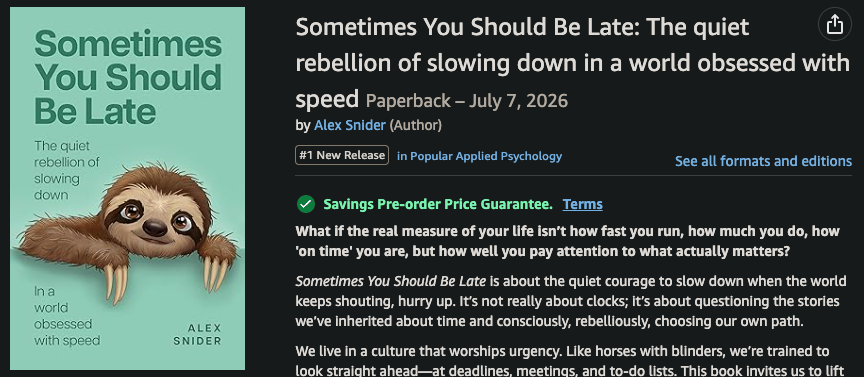
First, I’ve been so grateful for the response to pre-orders for Sometimes You Should Be Late! The book hit #1 as a new release in popular applied psychology. Wow! If you haven’t already, I hope you’ll consider pre-ordering! Link!
Second, after finishing my manuscript and turning to publicity, I’m easing back into sharing reflections through this newsletter. I’d like to confess that I feel some doubt about what to do.
Yesterday, an internal timekeeper was telling me it was time to send out a new missive with some fresh ideas. But between publicity for the book and feeling a bit low on energy, I struggled to hit a groove. I asked myself: do I push through the tiredness and rush something out or do I give myself a little space?
Part of what made that question uncomfortable was a story I noticed: that readers, especially those who generously support my work, were expecting something new from me right now. That I owed them output.
So today, I’m trusting the process. Rather than forcing something new, I wanted to share a favorite article I published in Psychology Today around this time last year. It feels especially relevant given some of the challenging national news of the past couple of weeks.
Here’s the link to the original article, which is about how even when the pendulum seems to be swinging against us, it’s also building energy for the return.
I hope it resonates and helps you trust the swings in your life. I’m trying to do the same, to give myself space for my creative output so that I can come back to you with something I’m proud for you to read, not just something that comes out regularly.
Trust the Pendulum Swing
Even in a crisis, connection, resilience, and possibilities take shape.
Posted February 24, 2025
The uncertainty of this moment is disorienting—like the early days of the pandemic when everything shifted overnight, and no one knew what to do next.
It can feel like everything is unraveling. People question what kind of country we are becoming, bracing for more bad news. Federal employees face sudden job cuts. Wildfires rage, floods displace families, and life’s everyday struggles persist—career setbacks, breakups, loss, and health challenges.
In times like this, it’s easy to believe the struggle will last forever. But it won’t. Hardship is painful, but it also creates space for reinvention and unexpected possibilities.
Deep down, we know hardship can lead to growth—but trusting that in the moment is the real challenge. The humble pendulum may be the reminder we need.
The Pendulum’s Downswing
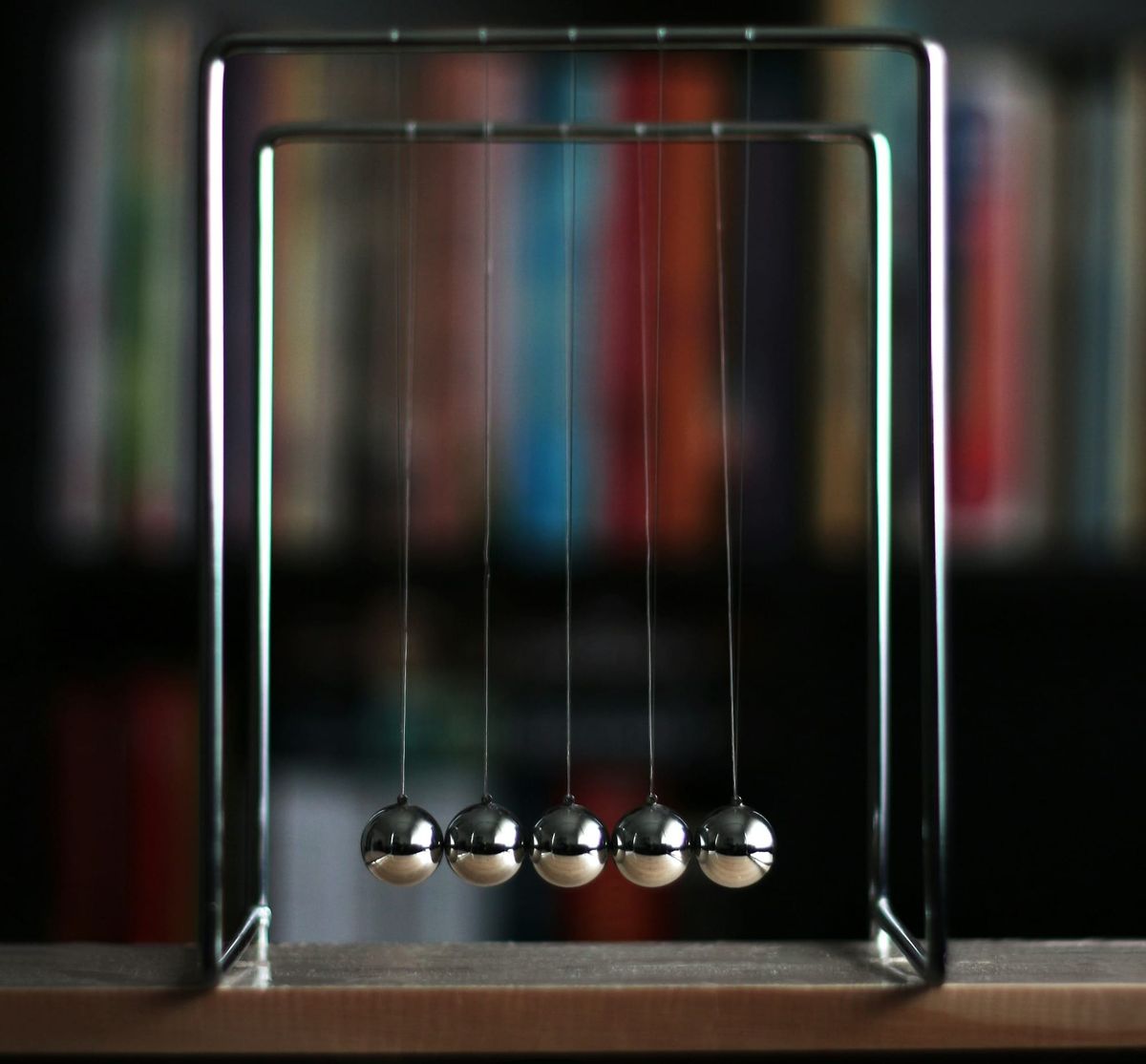
I’ve always been fascinated by the pendulum—rushing to one side, then slowing at its highest point, seemingly frozen before swinging back. It looks stuck, but the energy for its return is already there.
Right now, many people feel the pendulum swinging away—as their values are challenged, stability shaken, and sense of belonging questioned.

Source: Lance Anderson / Unsplash
For federal employees, contractors, and grantees, the loss isn’t just about job security—it’s about identity. Careers dedicated to public service are being trivialized. Some have been abruptly fired through cold, impersonal emails, while others wake up to tweets and messages filled with contempt for their work. As a federal employee myself, I’ve felt the weight of this firsthand.
The instinct is to retreat into defeatism, fearing that the momentum only goes one direction. Yet the pendulum offers us a different possibility.
Momentum in the Making
Something unexpected is happening within the federal workforce. Colleagues are checking in on and finding ways to support one another. At a recent meeting on the sudden return-to-office mandate, a coworker I’d never met suggested a shared Google Doc for carpooling and nanny shares—turning frustration into community. Others are refusing to follow unethical orders or choosing to resign rather than compromise their integrity.
Beyond the workplace, I see it in the public square. Friends who never asked about my government work are reaching out with genuine care. In town halls across the country, people are standing up for public servants. Neighbors are reconnecting—in my community borrowing folding chairs, a pizza stone, and a tablespoon of cinnamon rather than going it alone. Amidst the pain, there are connection, resilience, and collective action taking shape, too.
The same patterns show up in personal life. A job loss can feel like a dead end—and also open the door to a long-overdue career shift. A breakup can feel like failure—and also clear space for something more aligned. Even illness can force a reset in how we navigate the world.
Like a pendulum, the downswing isn’t just something to endure—it can fuel the next rise.
My Personal Swing: Trusting the Arc
For most of my 30s, I watched friends find love and start families while I felt stuck—cycling through dating apps, disappointing first dates, and despair.
Eventually, I stopped feeling stuck and focused on the life I had and what I could control—deepening friendships, exploring creative passions, and building a life I loved.
Then, at an event I almost skipped, I met someone. We talked for hours. It felt easy—like the connection I’d been searching for had finally swung back. Trusting the pendulum allowed me to recognize it.
Now I find myself single again and there are moments I feel stuck, again. But I remind myself: even when I can’t see it yet, the energy for the next swing is building.
Why It’s Hard to See the Shift
Let’s give ourselves a break—our brains aren’t wired to trust change. In fact, they’re full of biases that make it hard to see progress unfolding, such as:
- Negativity bias: The tendency to focus on threats and worst-case scenarios more than possibilities. This is why doom-filled headlines grab our attention and feel more real than hope.
- Availability bias: Our habit of recalling the most immediate or emotionally charged information—usually bad news—while overlooking slow, steady improvements. We remember job rejections but not how our interview skills are improving.
- Present bias: The brain’s tendency to overvalue immediate problems while underestimating the payoff of future growth and possibilities.
How to Trust the Swing
The challenge isn’t just waiting for change but staying engaged so we don’t miss it when it comes. Here’s how to lean into that trust:
1. Hold Worst-Case Scenarios Gently
When things feel bleak, it’s easy to assume the worst. But is that the only possibility? In The Work, a method of questioning stories we tell about ourselves or our world, Byron Katie offers four simple questions:
- Is it true?
- Can you absolutely know that it’s true?
- How do you react when you believe that thought?
- Who would you be without that thought?
Fear convinces us things can only get worse—that a policy shift won't have a counter-reaction, that heartbreak means lifelong loneliness, that we’ll never be healthy again. Katie's questions help create space for other possibilities.
2. Remember that Good Comes from Uncertainty, Too
A friend once told me, “You haven’t met everyone you will ever love.” It's a reminder that every meaningful friendship, career shift, and movement for change was once uncertain, unknown.
To fight back against our brain's biases, we can remember the times where something worked out in a way we didn’t expect—maybe a job loss led to a better fit, or the end of a relationship cleared the path for someone else.
3. Focus on the Next Right Thing
While we can’t control policy decisions or personal challenges, we can choose how we respond. Start by doing the next right thing—a lesson that Frozen II set to music. When everything feels overwhelming, the way forward isn’t about mapping out the entire path—it’s about taking one small, meaningful step at a time.
Instead of doom scrolling or focusing on our loneliness, show up for a colleague. Take an art class. Step outside, feel the breeze, and listen to the birds. The next swing begins in small steps.
Trust the Momentum
Buddhist teacher and psychologist Jack Kornfield often shares the reminder that suffering is not the end of the story—that no matter how deep the struggle, the story is still unfolding.
What feels bleak or stuck now—attacks on public service, social turmoil, heartbreak, or health struggles—is just one part of the arc. The pendulum isn’t done. The next swing could bring a renewed appreciation for government, a creative spark, new career possibilities, or laughter with someone you meet at a dance class.
Pendulums remind us to hold on—to create space for hope, patience, and each other. And if we can hold on, when the momentum shifts, carrying us, our communities, and this country in a new direction, we’ll smile—because deep down, we always knew it would.