Ambivalent Compassion
Charlie Kirk's death and the muddy emotional experience of being human

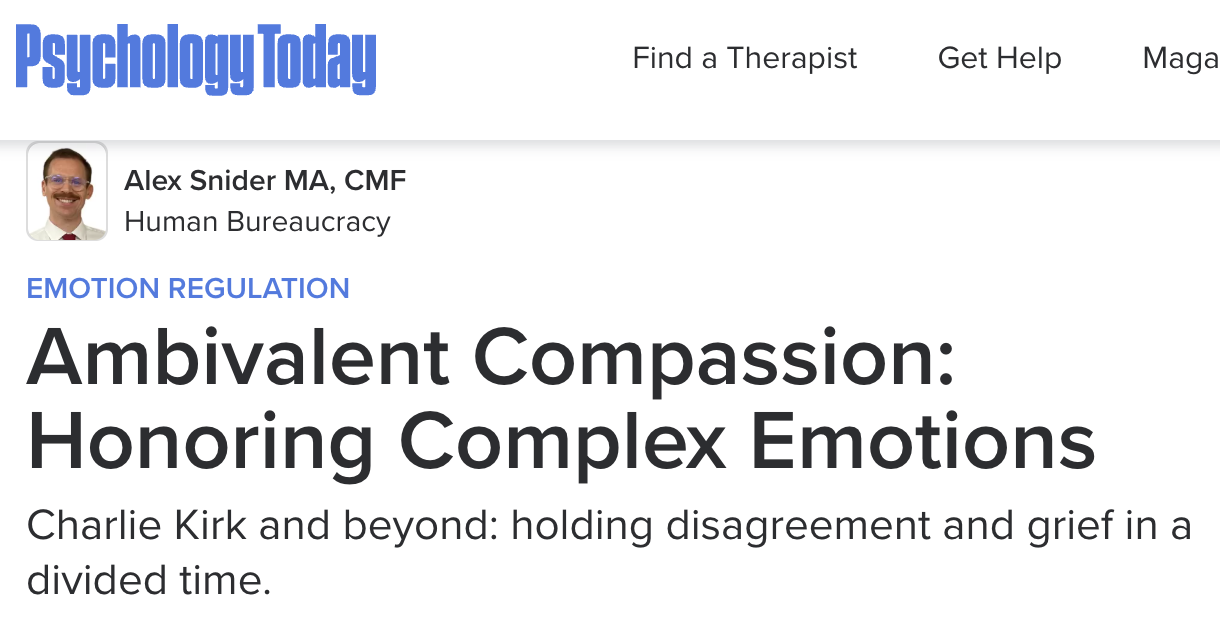
Today I published a new piece in Psychology Today on something I’ve been sitting with: what I call ambivalent compassion.
When people we dislike or disagree with suffer, our feelings often get messy. We may feel like justice has been served, Schadenfreude (cue up Avenue Q), and genuine grief, all at once. That’s been true in my everyday life: the aggressive driver who gets caught at a red light, the unkind boss denied a promotion.
And it’s felt true in the aftermath of Charlie Kirk’s tragic death. He’s someone I didn’t like much but I also grieve for him and those around him. In this charged moment, I was hesitant to add my voice, but I hope my experience serves others.

Key takeaways from the article:
Ambivalent compassion means holding disagreement and grief together without forcing one to cancel the other.
Research shows mixed emotions are normal; repressing them only makes them resurface in cynicism or numbness.
Tara Brach’s RAIN practice (Recognize, Allow, Investigate, Nurture) is a tool for meeting ambivalence with care.
Even in moments of tragedy and division, tenderness and critique can coexist. That honesty keeps us human and allows us to center others’ humanity, too.
Read it here!
I’d love to hear where you’ve noticed ambivalent compassion in your own life and how it’s landed with you!